Murmur
Push-to-talk dictation for macOS using your own OpenAI API key
Claude Code
A local, repository-based system for building a source-grounded candidate profile, triaging jobs, drafting tailored application documents, validating available outputs, and tracking results.
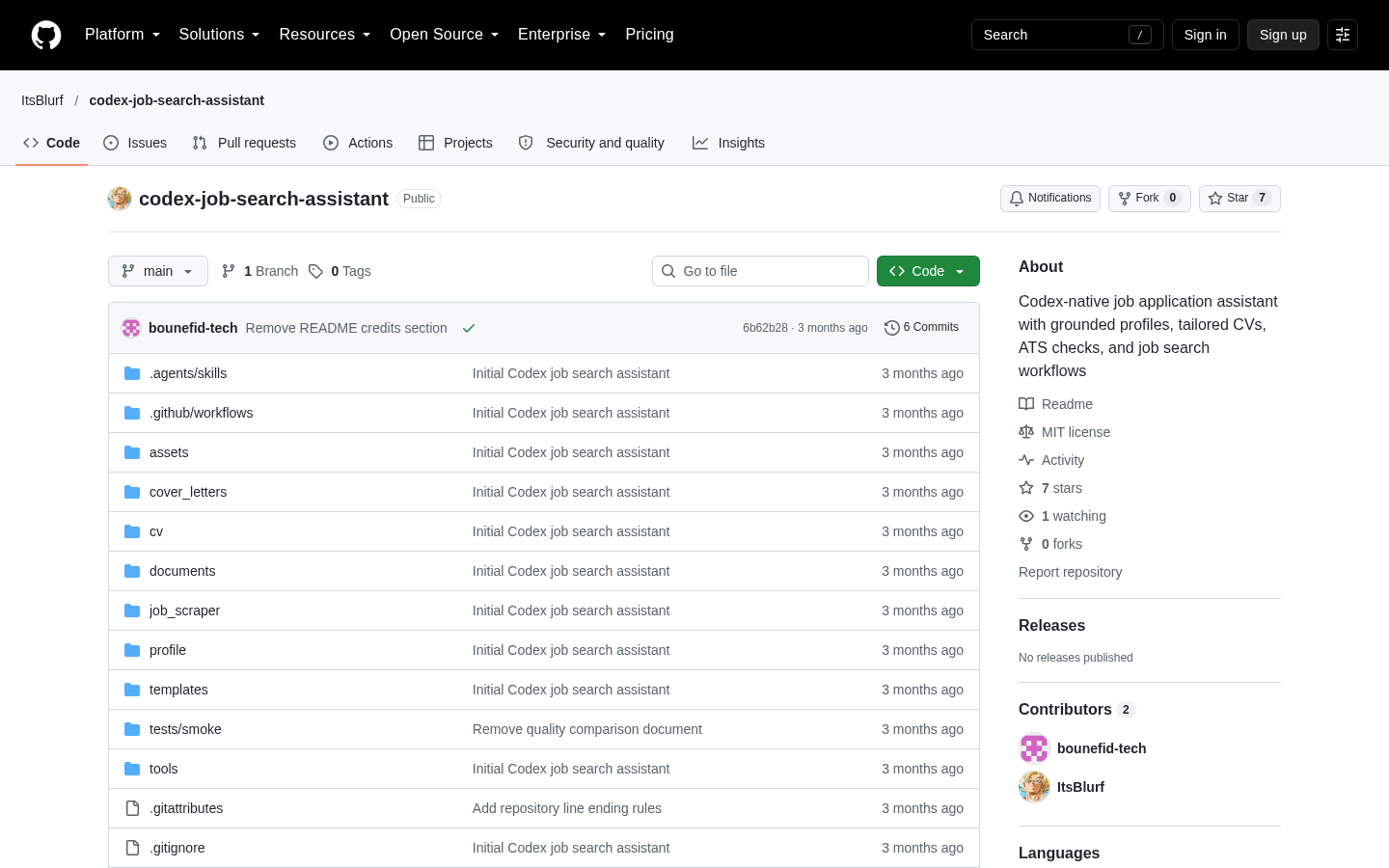
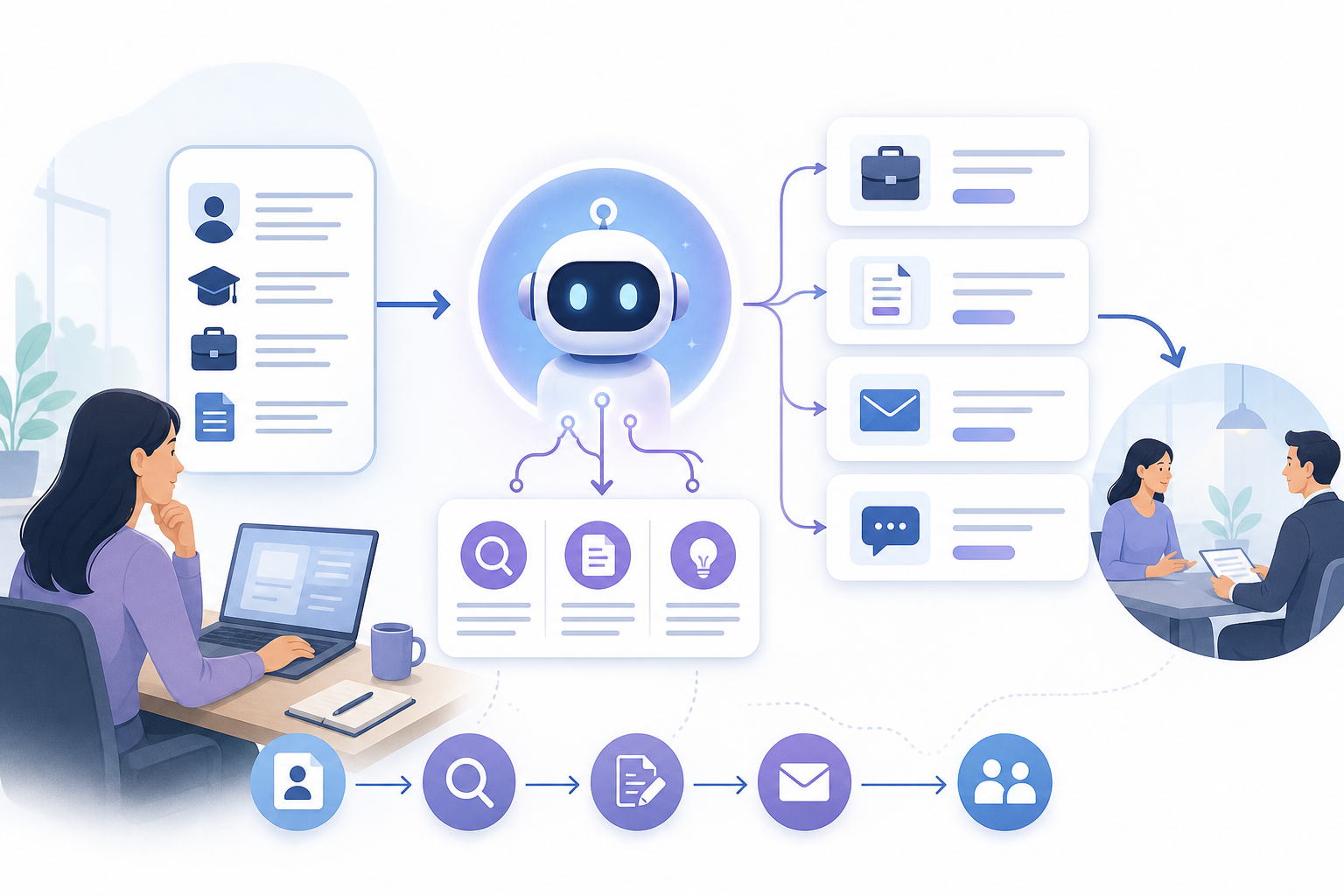
Codex Job Search Assistant is a repository-based workspace that uses OpenAI Codex skills to organize a job search from candidate profiling through application tracking. The documented workflow begins by cloning the repository, opening it in Codex, and placing career materials in designated local folders. Supported inputs include CVs, LinkedIn exports, diplomas, references, notes, and previous applications. The profile workflow cross-checks dates, titles, and education, labels inferred information, and asks before resolving factual conflicts. Its stated operating principle is to ground candidate claims in source documents and mark uncertainty rather than fill gaps with invented details.
The repository divides the process into focused Codex skills. The job-setup skill can import a documents folder, process a single CV, or gather information in interview mode. A profile-expansion skill searches the user’s documents and public profile links for source-traceable competencies that may be missing. For discovery, the job-scrape workflow searches supported sources, saves normalized results, and deduplicates them against a seen-jobs file. The supplied documentation does not enumerate every included portal, so prospective users should inspect the installed skills before assuming that a particular regional or specialist job board is covered. A separate skill can add support for another portal while respecting access limits and anti-bot protections.
For application decisions, the job-rank skill compares saved postings with profile evidence and reports strengths, gaps, deal-breakers, and apply, maybe, or skip recommendations. The documentation treats ranking as triage rather than a final assessment: the job-apply workflow evaluates a selected posting again before drafting. That workflow parses and saves the posting, assesses fit, drafts a tailored CV and cover letter from profile evidence, reviews grounding, tone, keywords, and fit, revises the documents, and then attempts compilation and ATS extraction. Outputs use LaTeX templates, and the repository includes a documented skill for registering and test-compiling custom templates.
The baseline environment is described somewhat differently across the supplied files. SETUP.md says the repository is usable with Python and Codex alone and specifies Python 3.10 or later. README.md lists both Python 3.10+ and Git as required. Users should therefore treat Python and Codex as the documented baseline while checking the README’s Git expectation against their intended installation method. Optional tools expand the workflow: lualatex and xelatex compile CV and cover-letter PDFs, Poppler’s pdftotext enables ATS text-layer checks, Bun supports TypeScript portal CLI skills, and Node.js is mentioned for some portal-development workflows. The repository documents explicit fallbacks. Without LaTeX it can still produce .tex files but cannot claim PDFs are ready; without pdftotext the ATS extraction step is skipped and reported; without Bun, portal CLIs are skipped while pasted postings and web search remain available.
The workspace records applications and outcomes in job_search_tracker.csv. The record-outcome workflow updates that tracker, archives submitted materials, and stores notes for future calibration. Another skill analyzes tracked jobs for recurring skill gaps and produces a prioritized learning plan. Local readiness and repository structure can be checked with setup_check.py and the documented smoke-test commands. The repository also lists private source folders, generated PDFs, scraper result batches, salary data, and environment files among its git exclusions. Users are separately warned not to commit CVs, diplomas, passports, references, private notes, generated applications, salary information, or secrets.
This product is best evaluated as a configurable technical workflow for job seekers who are comfortable with Codex, local files, repositories, and command-line checks. It provides a documented sequence for grounding profile claims, comparing roles, drafting application materials, validating available outputs, and recording outcomes, but generated material still needs factual and editorial review. Its usefulness depends on the completeness and accuracy of the user’s evidence, the quality of the job-posting text, the installed portal skills, and the available local tools. Editorial recommendation: run the readiness and smoke checks first, test one non-sensitive posting end to end, compare every generated claim with the underlying documents, and confirm relevant portal coverage before using the workspace for an active search.
| Category | AI Products, Developer Tools |
|---|---|
| Platform | Cross-platform |
| Pricing category | Open source |
| Built with | Codex |
| Added to VibeAtlas | October 21, 2026 |
The main decision is whether its evidence model, local toolchain, and available portal coverage match the way you want to manage a job search.
Sources: [1] github.com[2] github.com
A small trial can expose setup gaps, unsupported portals, weak source material, and document-validation limits before the workspace is used more broadly.
Clone the repository and run python tools/setup_check.py plus the documented smoke test. Record which optional components—LaTeX, pdftotext, Bun, or Node.js—are unavailable.
Use a small set of representative career documents and inspect how dates, titles, education, inferred details, and factual conflicts are handled before adding more sensitive material.
Paste a full job description or use a supported source, then compare the reported strengths, gaps, deal-breakers, and apply, maybe, or skip recommendation with your own reading.
Review the CV and cover letter against the source profile, verify the PDF only if compilation succeeded, inspect ATS extraction when pdftotext is available, and confirm that the tracker was updated correctly.
Sources: [1] github.com[2] github.com
Sources: [1] github.com[2] github.com
Recorded research signals from 2026-10-21. The editorial score is a selection heuristic, not a measured product rating. Counts may change.
Codex Job Search Assistant documents a coherent path from source-backed profiling to job triage, tailored drafting, validation, and outcome tracking. Its explicit fallbacks are important: unavailable PDF or ATS tools are reported rather than silently treated as successful checks.
The trade-off is operational. Users must prepare reliable evidence, understand which portal skills are present, maintain the local workspace, and review generated materials. It is a reasonable candidate for a controlled trial by Codex users who value configurability and traceability, but it should not be treated as a substitute for factual and editorial review.
Sources: [1] github.com[2] github.com
SETUP.md says the repository is usable with Python and Codex and requires Python 3.10+. README.md separately lists Python 3.10+ and Git as required. LaTeX, Poppler pdftotext, Bun, and Node.js are optional tools for PDF compilation, ATS extraction, portal CLI skills, or some portal-development workflows.
Read the sourceWithout LaTeX, the workspace can still generate .tex files but cannot claim that PDFs are ready. Without pdftotext, ATS text extraction is skipped and reported.
Read the sourceThe supplied repository documentation says supported sources can be searched and new portal skills can be added, but it does not provide a complete list of included portals. Users should inspect the installed skills for current coverage.
Read the sourceProfile setup cross-checks dates, titles, and education, labels inferred information, and asks before resolving factual conflicts. Drafting uses profile evidence and includes a review stage covering grounding, tone, fit, and keywords.
Read the sourceThe record-outcome skill updates job_search_tracker.csv, archives submitted materials, and stores notes for future calibration.
Read the sourceThe repository identifies the project as MIT-licensed and preserves attribution to MadsLorentzen/ai-job-search. The supplied material does not document hosted pricing or a separate commercial plan.
Read the sourceEditorial updated: October 21, 2026. Features, prices and repository counts can change. Evaluation advice is editorial interpretation, not a claim of hands-on testing.